

'The Python Hunt' Was Xander Robin's 'Chinatown'
Director Xander Robin and editor Max Allman on the search for meaning and answers in the Everglades.

Nothing Bogus is funded by its readers. To support this work, please consider upgrading from a free subscription to a paid one. For only $5/month or $50/year, you’ll get access to all content + the sublime high that comes from supporting independent arts journalism. Sharing the newsletter also goes a long way.
It’s easy to sneer at the Hollywood’s craven tendency to endlessly try to replicate a hit. But if you want to get something made, finding a smart spin on a hot subject is a pretty good way to do it. Today’s newsletter features a long conversation with The Python Hunt director Xander Robin and editor Max Allman. We talked extensively about their excellent new documentary and their approach to nonfiction generally. But I was also fascinated that the film was part of a wave of ambitious nonfiction projects that leveraged the post-Tiger King doc boom to tell stories that scrutinize contemporary America in deeper ways than everyone’s favorite lockdown guilty pleasure. It’s possible to find a hit and not recycle or replicate it, but rather locate the seed of its appeal and advance or subvert it with a story you actually, genuinely want to tell.
Here’s what’s happening this week:
On Saturday, I had a great time at the Lower East Side Film Festival seeing Ethan Fuirst’s feature debut, Can’t Go Over It.
The Lone Screen, a new one-night-only online film premiere experience, launches on May 7 at 9:30 PM with a screening of Something Casual from director Brandon Buczek. The service features discussion forums, director Q&As, and merch, and screenings happen at one time, with no pausing or rewinding. To buy tickets and learn more, go here.
In Indiewire, Darren Smith has a theory for attracting a sufficiently big audience for your little film.
And Sarah Shachat has some paths to funding.
What does a documentary director actually do? Penny Lane has some thoughts.
Scott Macaulay has a great look at look books in the most recent issue of his newsletter.
Gotham Week Project Market extended its submission deadline.
And the Sundance 2027 Development Track application is open through May 12.
Sophia Coppola is offering $20K for a short film plus mentorship to one lucky filmmaker.
This Wednesday, Pete Ohs will be at BAM doing a Nia Dacosta-moderated Q&A following a screening of Erupjca.
Do you live in New York and like to play soccer? Email nothingbogus1@gmail.com if you’d like to play pick-up games as the nights get warmer.
Please give some love to your favorite actor the world doesn’t know about yet.
If you would like to list in a future issue, email nothingbogus1@gmail.com with the subject “Listing.” (It’s FREE!) Include your email and all relevant details (price, dates, etc.)
REPTILE KING
The Python Hunt Was Xander Robin’s Chinatown
Director Xander Robin and editor Max Allman on the search for meaning and answers in the Everglades.
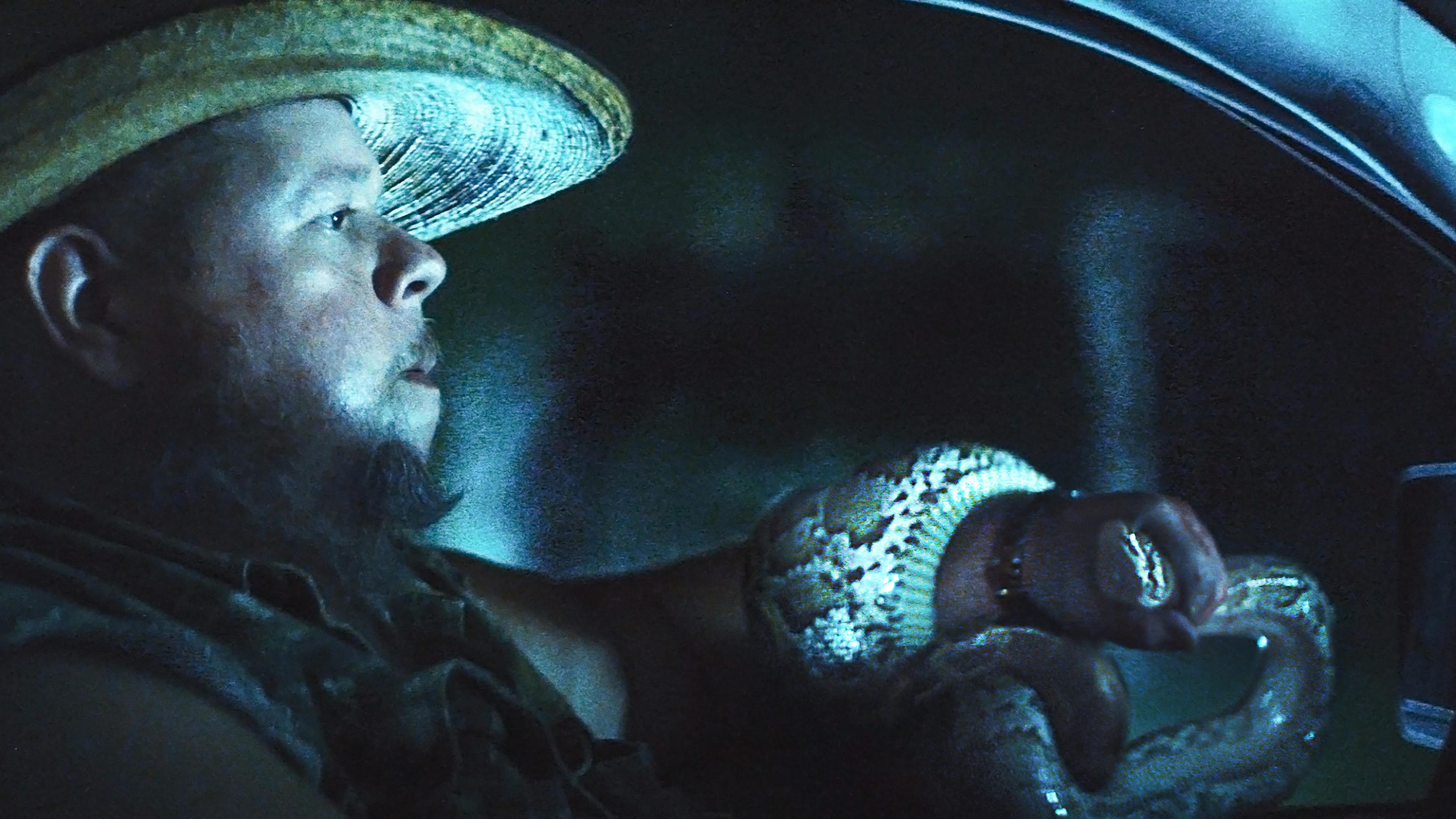
In the summer of 2022, as Xander Robin was struggling to get funding for a narrative feature he’d written about illegal reptile trading, his friend Lance Oppenheim suggested he make a different sort of reptile movie: a documentary, in the vein of Hands on on a Hard Body, about Florida’s Python Hunt Challenge. The 10-day challenge, in which participants flock to the Everglades to catch and kill as many Burmese pythons as they can, began in 2013 as a way to address the region’s growing issues with the invasive species. Robin wondered about the competition’s effectiveness and the snake’s culpability in the destruction of the Everglades — but also, he was keen to capture the area’s sounds and textures and the people who would enter the event.
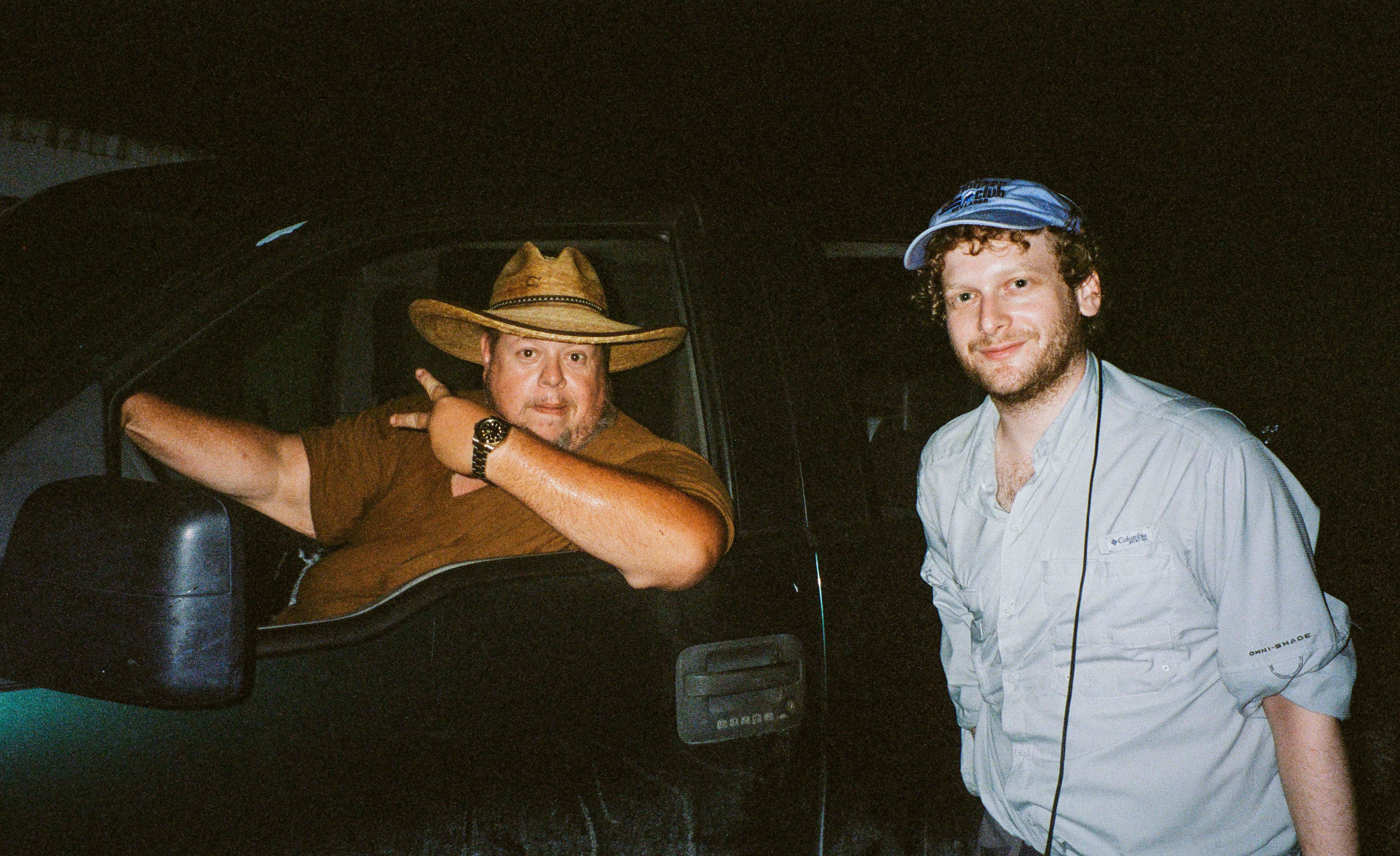
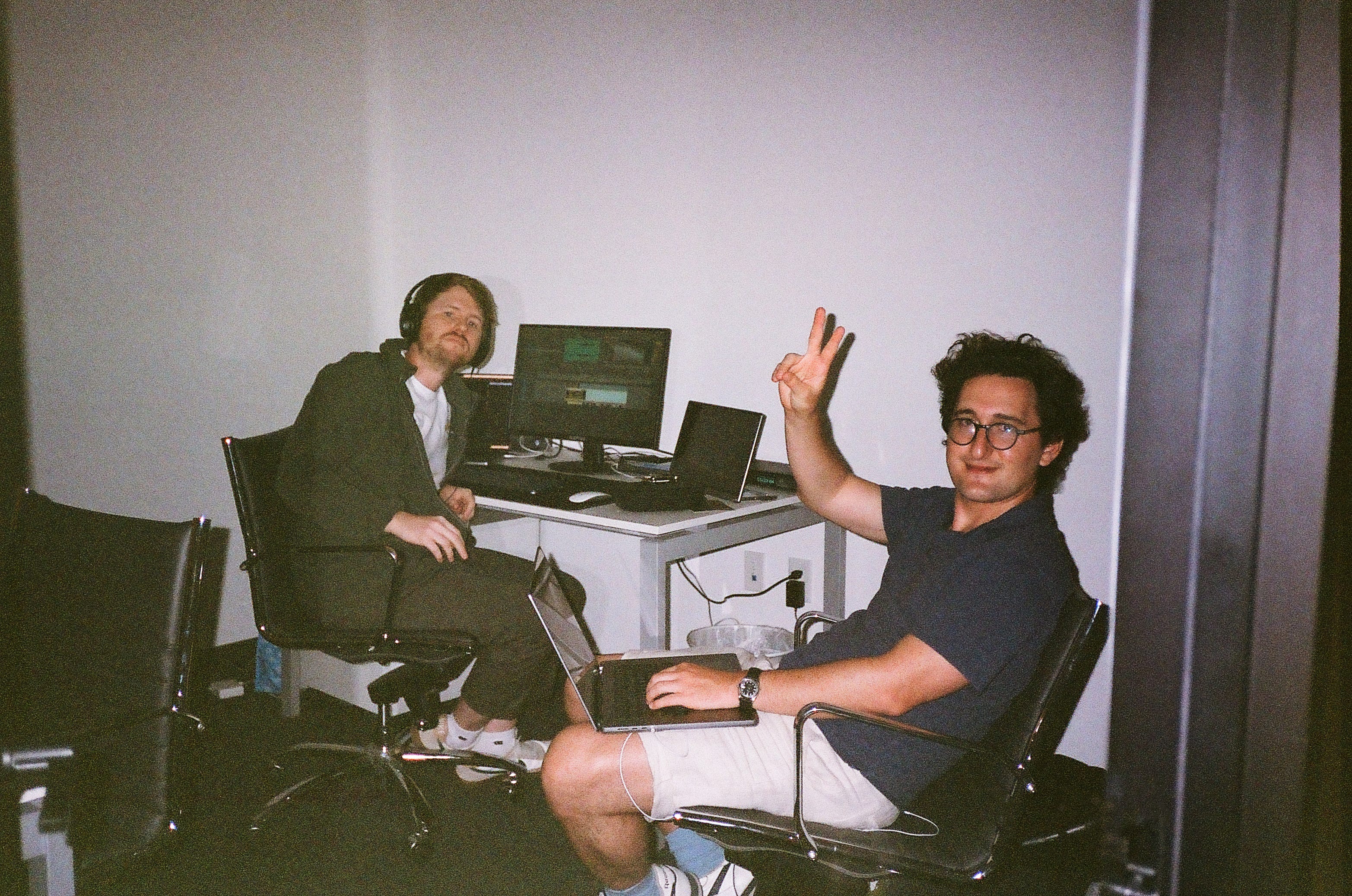
The timing for such a film couldn’t have been better. The success of a certain other wild animal documentary was still fresh in investors’ minds. And as a Florida native whose previous work had mostly dealt with animals and nature, he was an obvious fit for the project. He put together a small team and headed to the Everglades to shoot a self-financed sizzle that the team could bring to market. Throughout the process, he was in constant communication with Max Allman, his friend and former FSU roommate, who would edit and co-produce the film. At the time, Allman was on set of Oppenheim’s Ren Faire, which he also edited. Allman is quickly becoming one of the most sought-out creatives in nonfiction — in addition to Ren Faire and The Python Hunt, he has worked on Neighbors, Soul Patrol, and Jeen-yuhs: A Kanye Trilogy — and he recently served as an additional editor on Marty Supreme. I was eager to chat with both of them about the process of making The Python Hunt, the film’s depiction of Florida, and why Robin is so drawn to reptiles.
Tell me about how you guys got funding and got this project off the ground.
Max Allman: The first indie feature I cut was a hybridized documentary, and the financing process was like 18 months long. We basically got 80% of our financing after we got into a major film festival. It just always felt impossible to get people to give you money. And doing this, we went through the financing process right after Ren Faire got properly sold. Xander and I worked on the sizzle together, right after Lance Oppenheim and I had done the sizzle for Ren Faire, and it was the first time I had seen a sustainable model. It was at a time when people were lining up with nonfiction to give you money in hopes you might be the next Tiger King.
What do you mean by sustainable?
MA: Well, sustainable is certainly a relative term. But Lance had this idea that David Herbert had found, and basically went to a production company and convinced them to give them a little bit of money to make a sizzle, which tends to be about five or six minutes and include glimpses of full scenes to give people a sense of the movie. And then they went down to Texas, shot that sizzle, we cut it, and within a month they were bringing it out to the market and pitching it. Then Lance brought this Python Hunt idea to Xander, they made a sizzle together, Xander and I cut it, and they were pitching it within a month.
This is something that’s well known knowledge for every production company in the world: You find an interesting idea, maybe you shoot it for a couple days, you sense the promise of it, you cut it into a slick thing, and you take it out to the market, and hopefully someone with money comes on board. If you’re able to find this intersection of something that’s a very fun world, that feels relevant to where we’re at right now, that has amazing characters, and you can shoot it in a vibrant way, there was a moment when there was a real appetite from the buyer side. It’s been easier to finance narrative than nonfiction for like 90% of filmmaking history, and then there was this one weird little sliver from like 2019 to 2023 where it actually flipped.
Xander Robin: That’s what I was responding to. Sometimes when I was writing my scripted film I was like, Man, in some ways the documentary aspect is worth leaning into because obviously Tiger King was very successful, but mostly because when you involve animals it becomes really chaotic and you need all these different permits. Directing animals, there’s a sleight-of-hand and I was excited to try. And I was excited to film with real reptile enthusiasts after being in research mode for so long. With Ren Faire, I think they tested the limits on what an audience is willing to accept as real. With this, we weren’t trying to make anything seem fake. The subjects we were working with, they were like, “What kind of documentary is this? This isn’t like a documentary I’ve seen.”
MA: To me, the overlap is the relationship you build with the subjects. And the attitude becomes, How do you collaborate with the subjects to express their felt reality in cinematic terms? This was much more of a tone poem that is about a predator and prey, and maybe a misunderstood predator and misunderstood prey. So we were a little more hands off. But every documentary employs some degree of manipulation.
XR: Once you turn the camera on, people are performing for you. So directing becomes, how do you get the person who’s performing for you to stop performing and just be themselves?
And how do you get people to stop performing for you and be themselves?
MA: Weirdly, that does come down to directing. A lot of people become less self-conscious when they feel directed and when they have someone giving them the confidence to get back to that organic quality.
So what did that look like for you, Xander?
XR: It’s different with different people. But sometimes someone is so honest and pure the first time you film with them, and then as you go on it starts to feel like they’re acting or maybe they get self-conscious or maybe someone gets in their ear. And then it’s almost like on a narrative film when an actor is having a performance issue. You stop filming, hang out with them, have lunch, talk about things, and then be honest about what you want and try to figure out a way for them to be honest with you. And then in the edit it’s up to us to try and find the truth and remove the artifice. Audiences can tell when something is false. When we would do test screenings, we’d ask people watching it, “What don’t you buy?” And it goes beyond aesthetics and how something is framed. It’s a performance thing.
MA: I was finishing Ren when Xander was shooting this. And we would talk basically every night for the ten days of the competition. And then with our co-editor Byron Leon, we were continuing to build out some ideas so we could get ahead of future shoots if we needed to supplement narratively. In a post-Tiger King world, subjects, especially in regional places that have a history of being depicted in a way that’s not always fair or a little reductive, which I think Florida is certainly a victim of—
XR: People were nervous about that. A lot of animal people really don’t like Tiger King. People would want to know what the title was going to be, thinking it would be something more salacious.
MA: But Xander, as a person from South Florida, who’s a part of the community — and weirdly as a narrative filmmaker — had more apprehension to ask a subject to do something that did not feel natural to them at all. He was always forthcoming about the intentions of how he was depicting them.
XR: Going from a scripted film to documentary, you’re like, Why would I ask someone to act in this way? Let’s lean into the things that make this medium beautiful. But I was also interested in making it heightened and expressive. A lot of that came from the animal shots. And it’s a naturally cinematic structure to the competition.
MA: There’s this idea that subjectivity is not truth. But I find subjectivity to be far more truthful than objectivity most of the time. Nobody really has a shared idea of what is real or not anymore. And I love a lot of documentaries that put the camera down and allow everything to wash over you almost on an ethnographic level. But if you’re on hour eight of an overnight drive of not having found any snakes on the sixth night in a row, if you just film it how it is and have a character be like, “I’m pretty tired right now,” to me that doesn’t aspire to the immediacy of what that feels like. And that’s the most exciting thing nonfiction filmmaking can do — use the tools of cinema to try to replicate how big something feels inside of us as it’s happening rather than just observe it through some cold POV.

Was there a primary question you had going into this that you wanted to answer for yourself?
XR: The year before we filmed most of this movie, the first several nights I went out and I didn’t see a single python. I was wondering if this was all overblown or if the pythons were really out there in the way the media said they were. I had heard there was a professional python hunter who lived out in the Everglades in a place called the Holey Lands, and his name was Jimbo, and he had an interesting reputation. So I was asking around and I was introduced to him and we had a meeting at a Bass Pro Shops, and he drank three vodka cranberries and he said that everything I was seeing on the news about the pythons was a lie. And he was getting into a bunch of other things. I thought maybe he was a conspiracy theorist, but I read one of his crazy theories and found a scientific paper that proved it was true. He lived out in the Everglades. And I was willing to hear out a lot of things he had to say about anything involving the Everglades. I’d been saying for years that I wanted to make Chinatown in the Everglades. And I remember I called Lance after and I said, “Lance, it’s Chinatown in the Everglades! It exists. It’s real.”
MA: There’s definitely one scene in the movie that is our Chinatown, where he goes to the council meeting and meets the out-there guy at the bar.
XR: Those were the questions. And also, what’s the best way to find these snakes? And then, how much of the destruction of the Everglades is the fault of the snakes? The thing is, it’s really hard to answer those questions. All you can do is show they’re not the only source of the problem. The only thing we could prove was how people felt about it. And then the question is: How do we thread this larger story within the story of these characters? And are we going to find really compelling characters who are interesting and can catch a snake? And that’s where Toby came in.
These questions almost sound technical to me. But were they personal to you?
MA: I moved to South Florida in middle school and Xander and I went to film school together. Lance is a Broward County guy. There’s a lot of people for whom Florida is very personal. And I think the experience of being from Florida is always a deeply conflicted one. You’re always overwhelmed by its beauty and its weirdness and the specificity of all these people coming from different places who have colliding ideas about what is right and wrong. And then, you’re dealing with some of the small, lower case-c corruption that exists within the structures that have built Florida. Which is to say, for me, it could never be as simple as all of our problems could be placed onto one other thing. That sort of liberates us from having to come to terms with the way we’ve wrought destruction on our most abundant resource. All of these people come like flies to a light for this event in search of a feeling of contribution. And then, does that contribution have meaning? I don’t think anyone who has attended the Python Hunt has helped the python problem in Florida. But I do think they have within themselves felt like they were part of something that was at least trying to contribute to the betterment of something. That’s always the interesting question of activism too: Is that enough?
You mentioned that Tiger King’s success helped you get this made. And it feels like you then almost subvert the expectations of someone looking for that kind of doc about Florida python hunting.
MA: You know, there’s what, three kinds of stories? Man vs God, Man vs Man, Man vs Self. I think because this movie became a documentary about futility for everybody, it became more about a Man vs Self kind of thing. Everyone’s individual stories became about what does it mean if the reason I came here I can’t perform? But everyone is undergirded by this deep love of the land they’re on, and so they’re able to rationalize their own failure through the experience they’re having. So many documentaries we talked about when we were thinking about this were like the Les Blank thing, too — documentaries that are portraiture in nature or regional kind of vibe pieces. Garlic as Good as Ten Mothers and The Blues According to Lightning Hopkins. These docs that were more about capturing a moment in time and a people in place. I think as documentary has gotten commercialized over the past ten years, there’s been this big desire to infuse it with some of the traditions of reality television. And sometimes I think it’s really brilliant. The difference is when you can sense there’s a storyline that is in the undercurrent, how do you not make it subterranean? I think once we really landed on who the characters are, it became about what their relationships reveal about themselves throughout the process. And what this whole event reveals about Florida as a constantly evolving place.
XR: I’m sure a different director would’ve created reality TV type situations and conflicts. It felt like there was an opportunity for us to not do that and get away with it.
That’s what I like about the film. It’s a refreshing choice. And one that ends up being much deeper in the portrait it’s painting.
XR: My favorite sequence in the movie is this moment Max thought would be ten seconds long. It’s the whole barbecue where they grill the snake and are just hanging out. I remember filming it and thinking, this is what the movie feels like. There is some tension, but it’s all pretty lowkey. People are misunderstanding each other, but it’s OK, and that’s what life feels like. That felt so honest to me. There were definitely some people who wanted to speed that sequence up. But then we’d watch it with people and it would actually feel like — sorry to go Quentin Tarantino mode — that’s when the movie starts becoming the movie.
MA: It had an Altmanesque quality, too. You have this weird, final intersection of all these characters who have been in each other’s worlds but have also been in their own private worlds. And then there’s just this shaggy dog quality to it. People are coming out here to have an experience that’s mostly been denied to them. And this is actually the moment when there is some level of actually getting to experience it.
I always find that people I interview are bad at talking about their own talents but good at talking about the talents of people they’ve worked with. So I wonder if both of you could give the insider view of what each other is really strong at?
XR: I’m trying to get better at telling a story. That’s not the number one reason I like to make movies. It’s all these other things — characters, places, sounds, textures, feelings. And Max has such an instinctual great story sense. It’s such a joy to collaborate with him. And we have a shared musicality, so when it comes to bouncing edits off each other there’s a shared rhythm. And he has an amazing instinct for when to take a breath, when to speed up.
Max, is that all intuitive? Or are there influences you’re frequently thinking about and applying to different films?
MA: I came to editing in an interesting way, which is that I was editing commercials for a long time, and it was depressing me and I felt spiritually bankrupt and I sought out the sorts of movies that I wanted to be a part of when I moved to New York. And I think what really helped is the first two movies I worked on were these very hybridized, weird nonfiction films that taught me that every movie speaks its own language and has its own creative value system for what you need to give an audience narratively to keep them engaged. And then, once you’ve bought a level of credibility with the audience, you can kind of enter into vibe mode. The more you watch movies with people and feel their physical reaction in the moment, you understand when you have spent too much in one direction and when you have starved the movie in the other direction.
Working in creative nonfiction, a lot of that is invented and manipulated in the edit. And a lot of it happens in response to fishing expeditions during production. And then the very magical thing about nonfiction filmmaking is you get to go back if you have the money. You cut and understand where you’re at and also understand what is your north star narratively, and then you get to seek those things out in future production. With documentary, you’re aspiring to an emotional account of reality. And sometimes that requires playing with time. I always try to operate with emotional logic as the driving force for how you construct something.
And Max, what’s Xander great at?
MA: Xander always has a left-of-center way to shoot something, frame something. He’s a real filmmaker in the sense that when he directs, he directs with extreme intention, he knows how he wants it to feel. But also, he has no problem getting his hands dirty, getting on the keys, showing me how to express his language better through the edit. And he always has a jagged edge in his editing that cuts out before you think it should or hits you hard in a way I’m envious of.
Since film school, Xander’s films have just had this effortless cool. He has so much style, a deep library of references, an intuitive filmmaking sense that was really easy to be insanely jealous of. But what was so special about watching him make this movie was the level of humanity he brought to it and seeing the responsibility he felt depicting a place and a people that mean a lot to him. Never in a way that was navel-gazing or patronizing. And never in a way that sacrificed the exciting ways to make it cinematic.
Lastly, Xander, where does your interest in reptiles come from?
XR: I grew up in South Florida and there would always be these brown anoles that would get into the house. We never really had pets in the house so those are the animals that would come in. Then I moved to New York, lived there for a while, and came back to Florida, and it’s crazy how the reptiles have changed. There are dozens more invasive reptiles that are around the house I grew up in that are larger and more varied. And it’s interesting to see how all this has affected everyone. You see 1-800-GOT-IGUANAS. Iguanas are legal to shoot outside of your house. People are shooting them with air rifles. So it’s just an unavoidable thing.
I also identify with reptiles in that they’re this maligned, misunderstood species. They’re seen as creepy by a lot of people but a lot of people are really obsessed with them. And I always found it really interesting that the people who are most obsessed with them are the ones who are either called to remove them and kill them or they’re doing fucked up things like smuggling them. So in 2016 I made this short Lance Lizardi, about this guy trying to get on Conan O’Brien’s show. And reptiles are the easiest way. Basically the least famous person that would ever get on Conan would be a guy with a bunch of monitor lizards. But I realized I had this instinctual appreciation for these creatures. I like to identify with the freaks of society.
MA: I made the hip-hop beats on Lance Lizardi.
Is there something about them aesthetically too?
XR: For sure! I’m aesthetically inspired by Florida, and the reptile is the mascot in a way. There’s a lot of cinematic power there. I don’t want to do it over and over. But I’ve got at least one more reptile movie.
Catch The Python Hunt in select theaters starting May 8.


